Digital collections

Document of the month

November 2025

The revolutionary year of 1968 had witnessed the suspension of the Cannes Film Festival for the first time in its history, following pressure from student strikes joined by artists and filmmakers. In Europe, the insurrection spread to other film festivals and exhibitions, resulting in major disturbances in Venice, Pesaro and Knokke-Le Zoute (Belgium), among others. Just a couple of years later, the flame would also be ignited in Berlin, following a censorship scandal against a film that portrayed the harsh actions of the U.S. military during the invasion of Vietnam.

While the struggles of the ‘1968 generation’ were stirring up other international festivals, the official discourse of the Spanish regime, endorsed by the media and the festival organisers themselves, presented the San Sebastian Festival as “calm”.

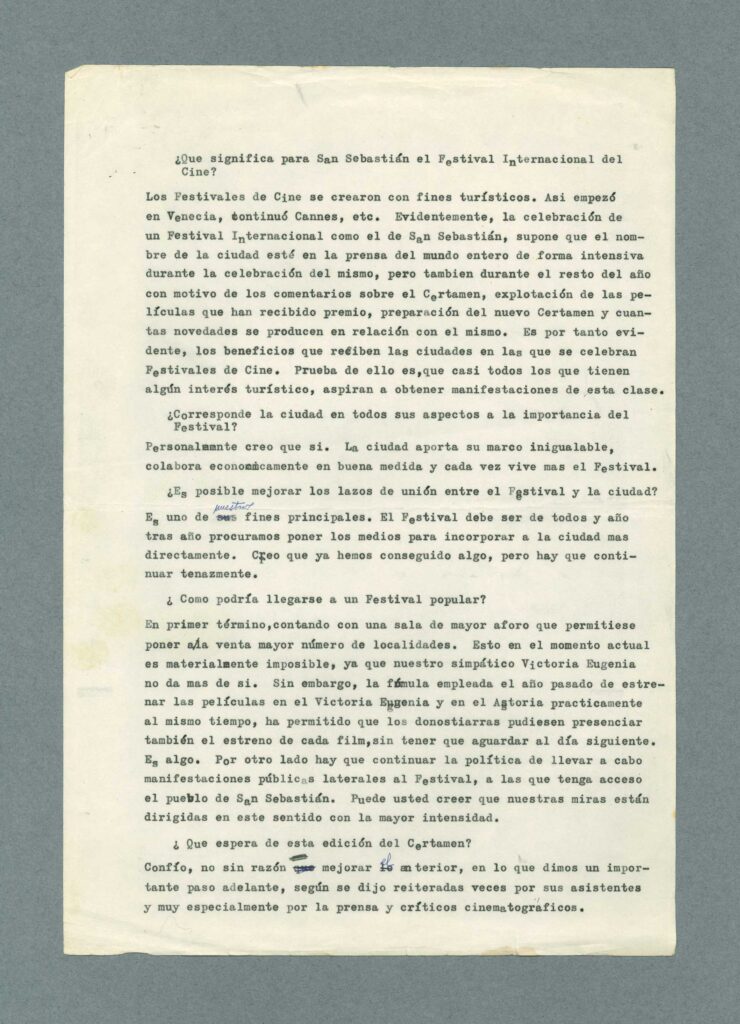
This interview with the festival’s management – led since the previous edition by Miguel de Echarri – conducted on the eve of its 16th edition, emphasised its most cosmopolitan aspects, such as the tourist appeal inherent in the institution and its relationship with the region and its citizens. The interview’s responses stripped these cinematic events of any political dimension, stating that “film festivals like Venice and Cannes, and also San Sebastián, were created for tourism purposes”.

Subsequent researches in the field of festival studies have shed light on this aspect: the Biennale was founded in 1932 by Benito Mussolini’s fascist government to promote a national Italian cinema that would compete with other cinemas – keeping a privileged position for German cinematography – and during the first years of activity, until its interruption during the Second World War, it was a fertile ground for the exhibition of propaganda films. The Berlinale and the San Sebastián Film Festival, despite their differences, were both created in the post-war period and were inextricably linked to the Cold War context. While the former, created by the U.S. army, attempted to redefine itself in a city literally divided by an ideological wall, the latter, conceived in the midst of a dictatorship, became the cultural flagship of the regime’s developmentalist phase. In short, a ‘film Olympics’ permeated by state interests, as Marijke de Valck points out in Film Festivals: From European Geopolitics to Global Cinephilia.

And, of course, the 1968 Festival was not far removed from an international climate that protested against the increasingly rigid structures of the competitions: after having suffered for more than two years the impositions of Francoist censorship, the film Ama Lur (Nestor Basterretxea, Fernando Larruquert) was screened out of competition, an effort of cultural resistance that the regime tried to distort. Some international media outlets also reported a series of protests by Basque youth after the screening of the American film The Legend of Lylah Clare (Robert Aldrich), with pro-Vietnam pamphlets being thrown and cries of ‘Yankees go home’. And amid the supposed calm, the most deafening of bustles: the censorship suffered live by the New American Cinema retrospective, after three days of screenings.

Document
Interview with the competition organisers prior to the 16th edition in 1968

Identity statement area
ID: 47174
Catalogue number: AO1968-1969.0145
Location: M01.B04.C05
Classification scheme: 1. EXECUTIVE
Title: Interview with the competition organisers prior to the 16th edition in 1968
Date of creation: 1968
Level of description: Simple documentary unit
Extent and medium of the unit of description: 1 document

Context area
Producer: San Sebastian International Film Festival

Content and structure area

Conditions of access and use area
Conditions governing access: Conditions governing access
Conditions governing reproduction: Conditions governing reproduction

Control area
Preservation: Anna Ferrer, Andrea Sánchez
Cataloguing: Edurne Arocena (Ereiten)
Digital collections

Document of the month

Interview with the competition organisers prior to the 16th edition in 1968 (1968) San Sebastian Festival Archive. [+]

Other documents of the month

[+]

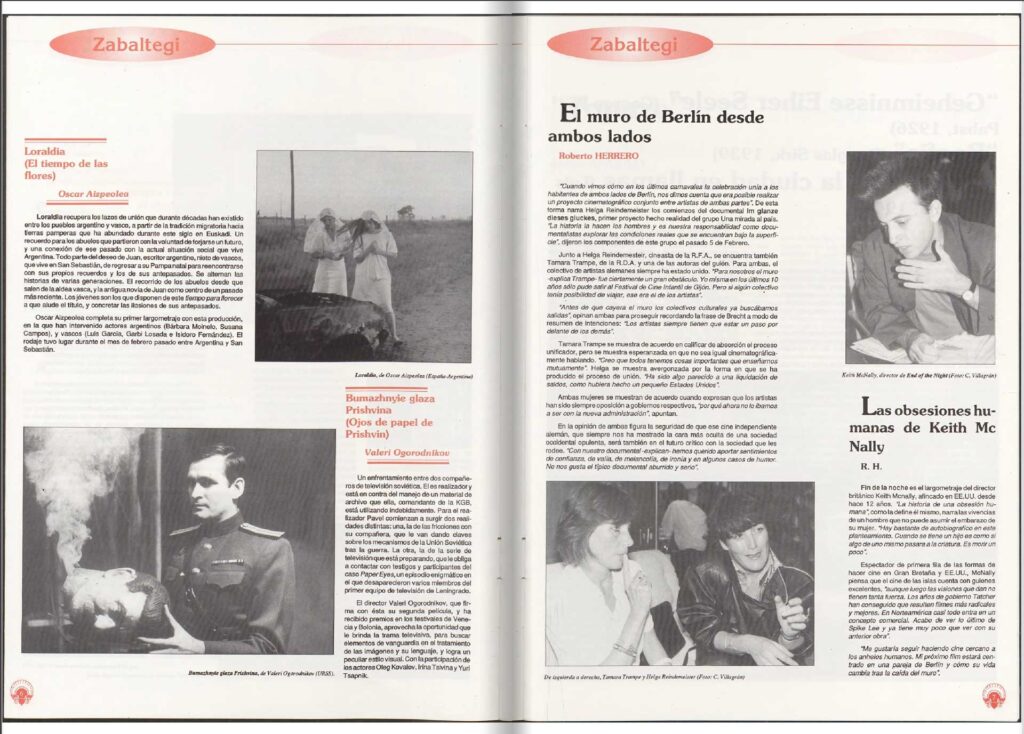
Fifth issue of the 38th edition of the Festival (1990) San Sebastian Festival Archive [+]

[+]

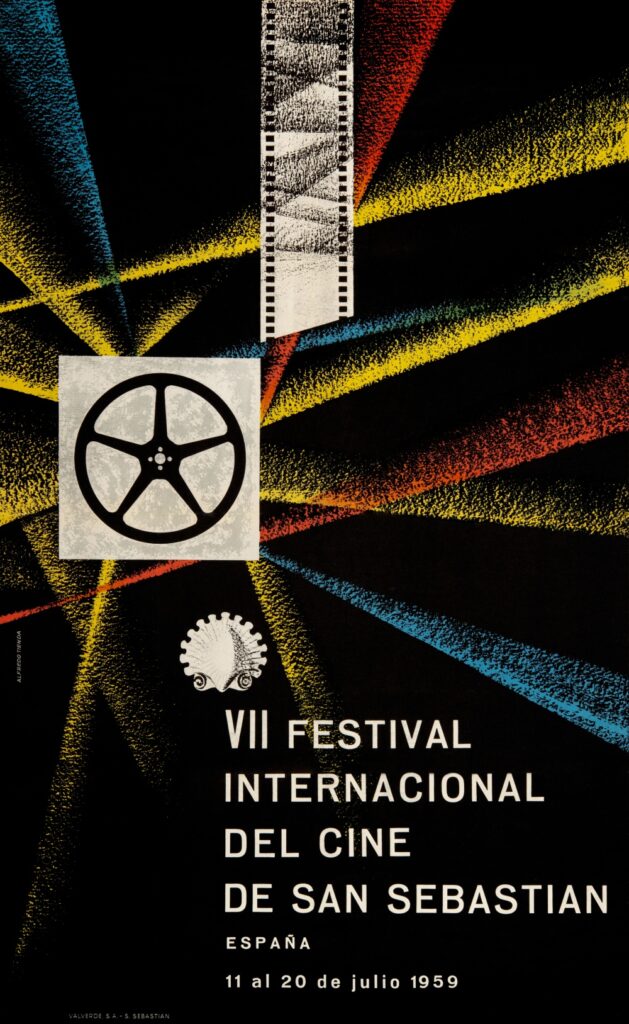
Official poster of the 7th edition (1959). San Sebastian Festival Archive. [+]

[+]

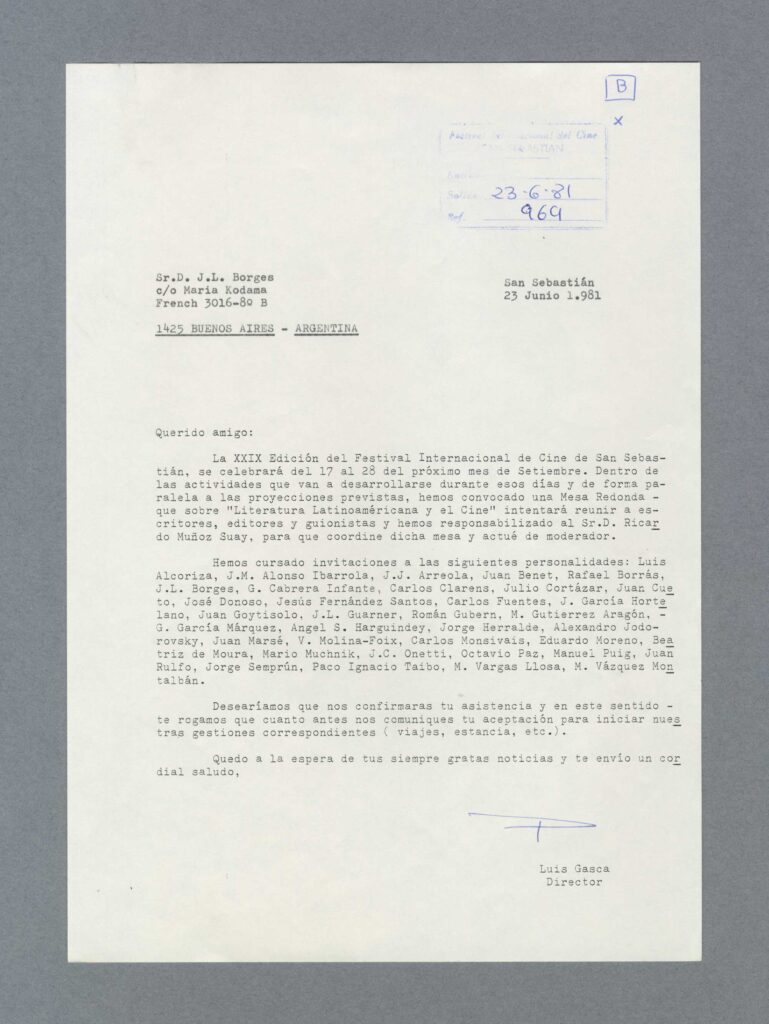
Letter from Luis Gasca to Jorge Luis Borges on the occasion of his participation in the round table discussion ‘Latin American Literature and Cinema’ (1981) San Sebastian Festival Archive. [+]

[+]

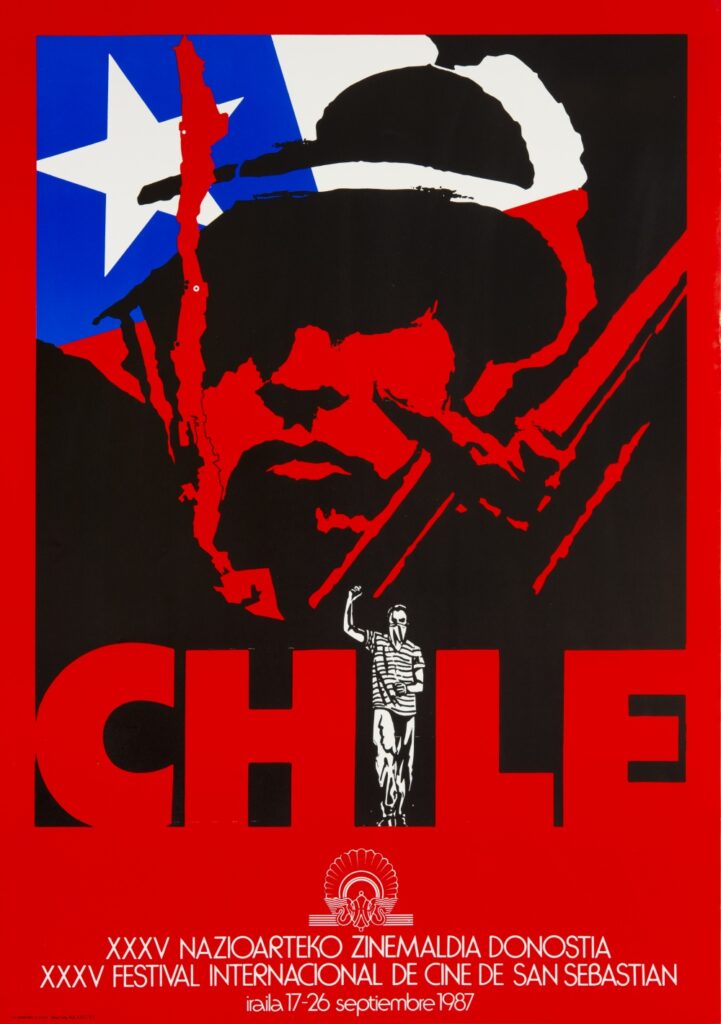
Poster of the “Chile” retrospective (1987). San Sebastian Festival Archive. [+]

[+]

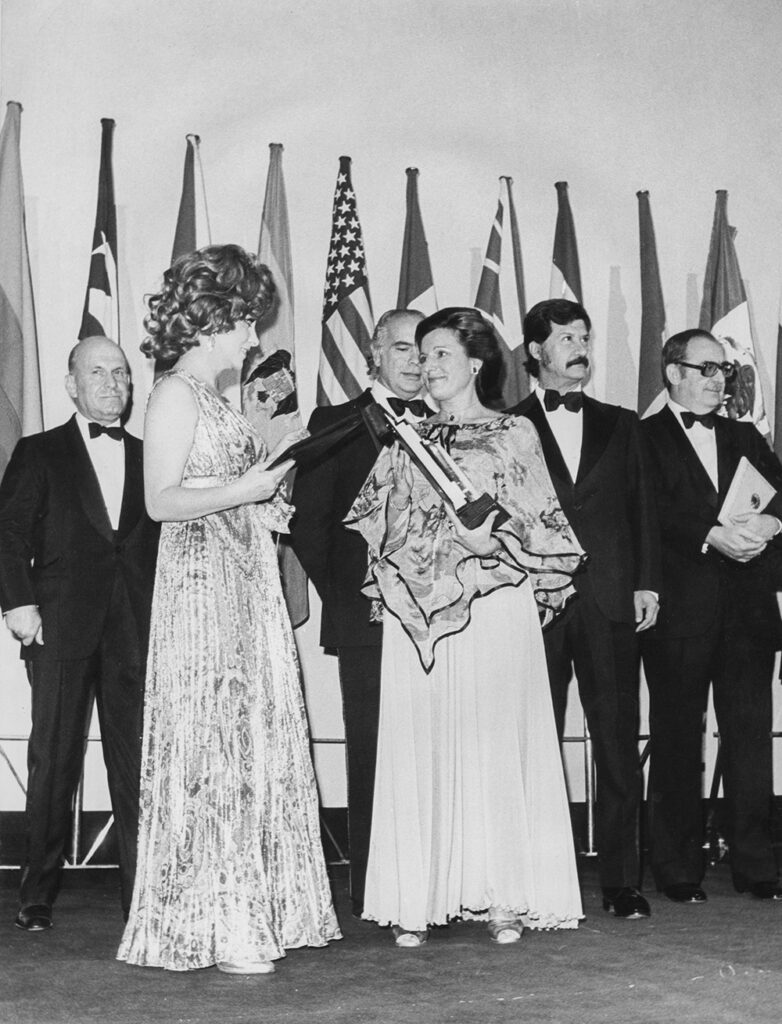
Actress Gina Lollobrigida presenting the San Sebastian Award for Best Female Performance to the distributor Procinor for “A Woman Under the Influence” (1975) San Sebastian Festival Archive. [+]

[+]

The actress Josefa Flores González, better known as Marisol or Pepa Flores, at the Hotel María Cristina (1960) San Sebastian Festival Archive. [+]

[+]

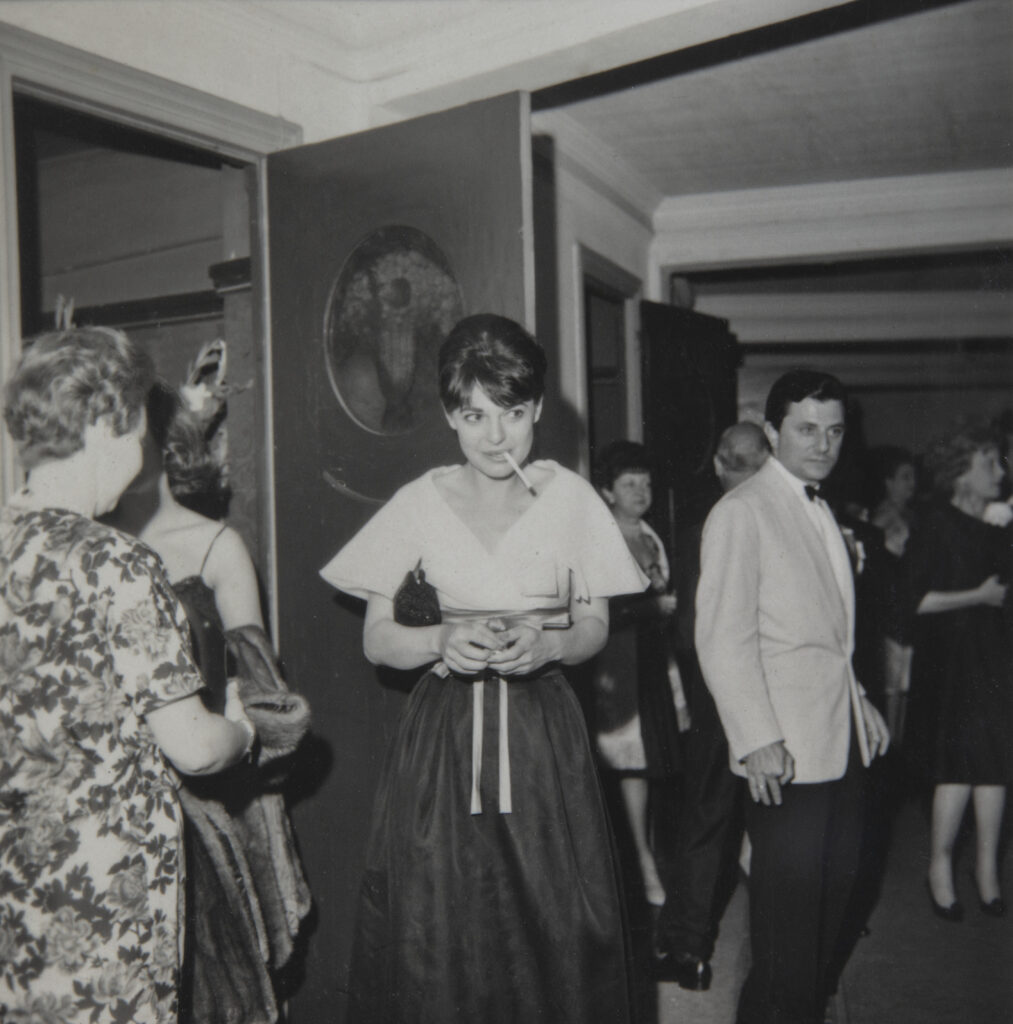
Anne Bancroft at the Victoria Eugenia Theatre’s boxes entrance during the presentation of the film “The Miracle Worker” (Arthur Penn) (1962) San Sebastian Festival Archive. [+]

[+]

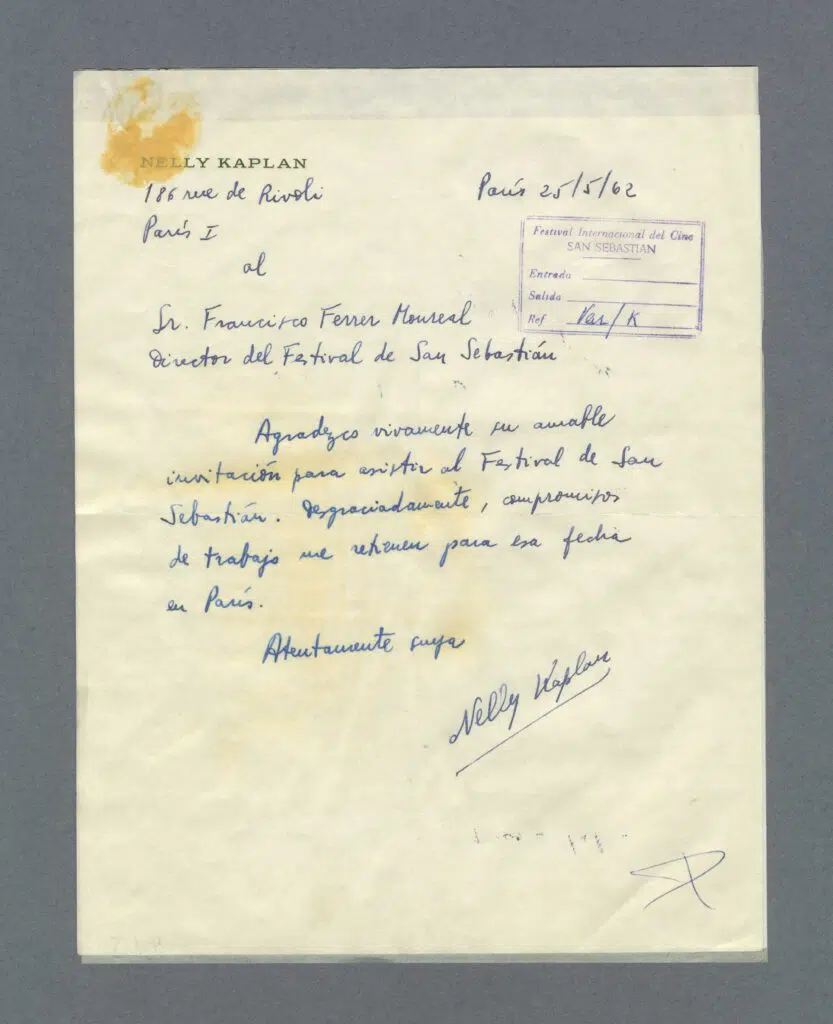
Letter from Nelly Kaplan to Francisco Ferrer on the invitation to the festival (1962) San Sebastian Festival Archive. [+]

[+]

Handwritten thank you note from René Clair (1959) San Sebastian Festival Archive. [+]

[+]

First issue of the 25th edition of the Festival (1977) San Sebastian Festival Archive [+]

[+]

Portrait of director Valeria Sarmiento (1988) San Sebastian Festival Archive. [+]

[+]

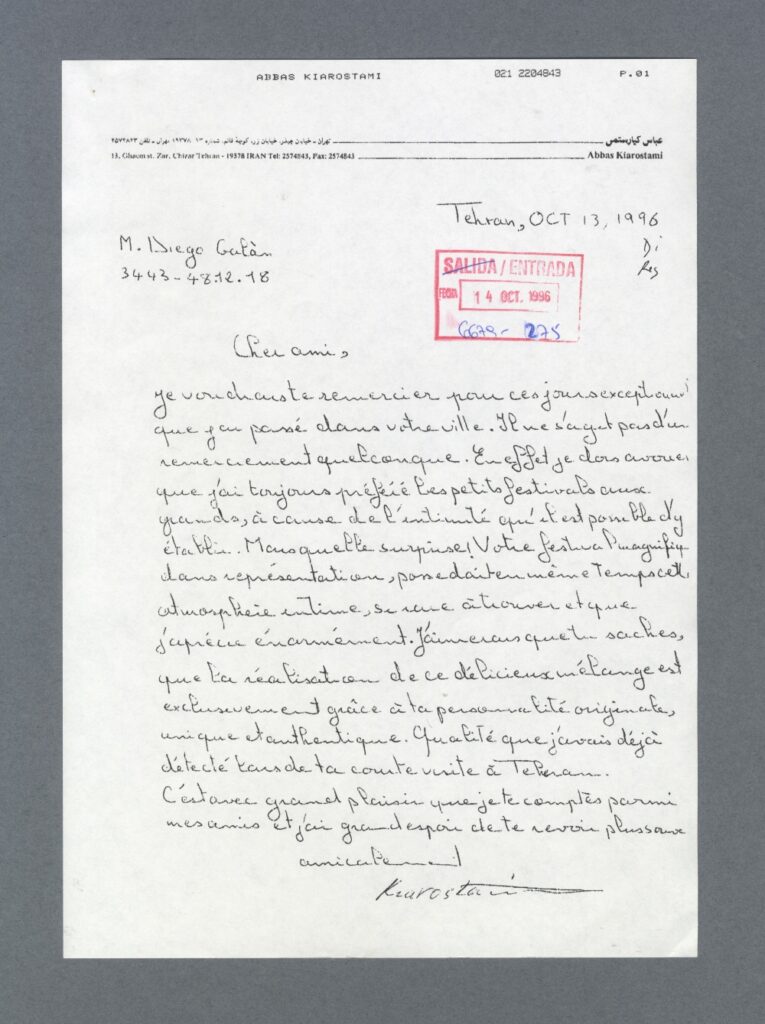
Fax from Abbas Kiarostami to Diego Galán (1996) San Sebastian Festival Archive. [+]

[+]

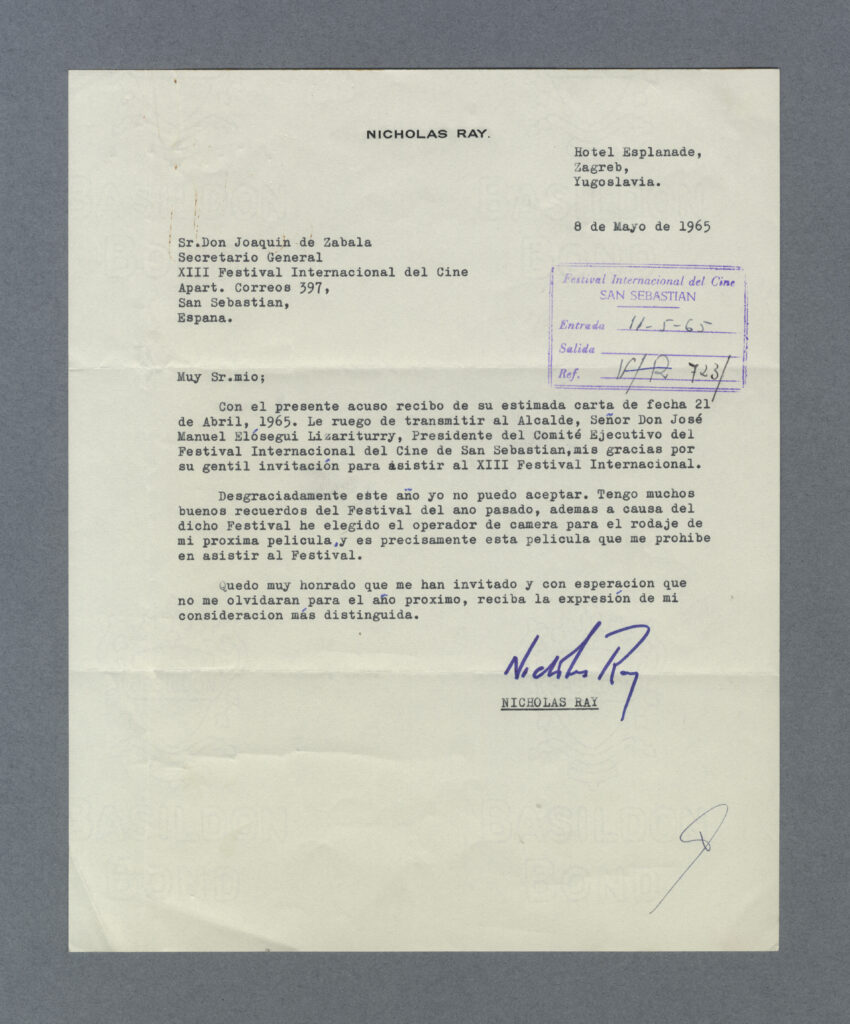
Letter from Nicholas Ray to Joaquín Zabala (1965) San Sebastian Festival Archive. [+]

[+]

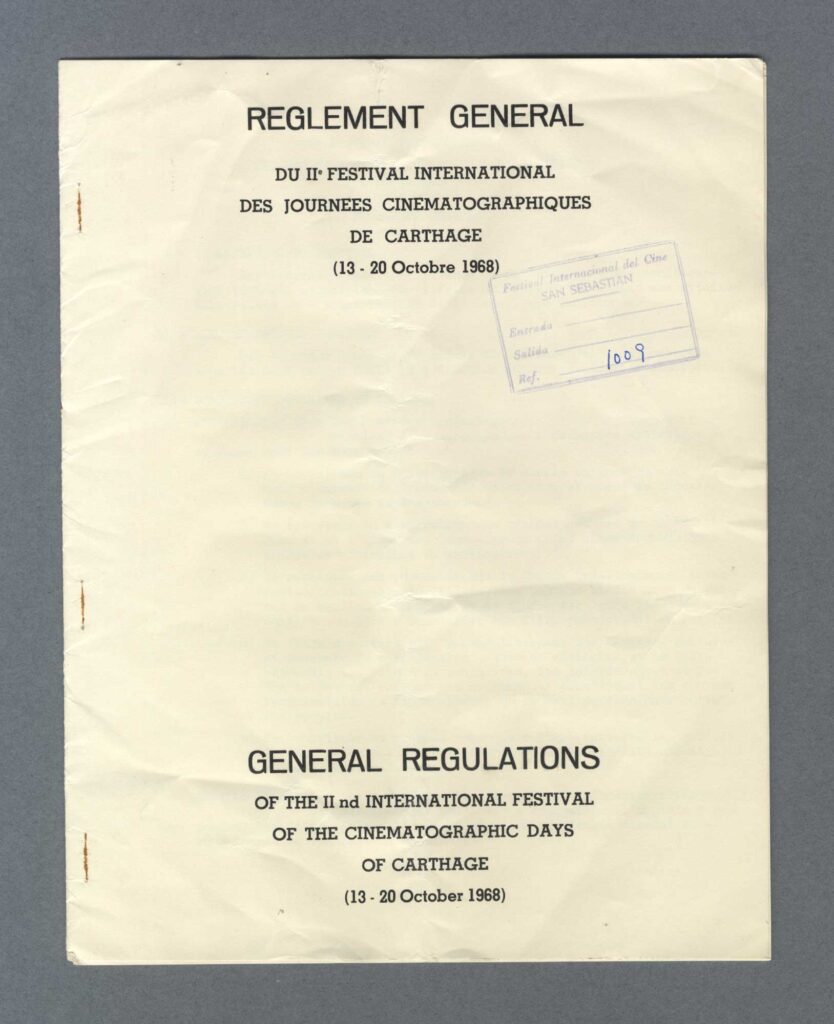
Regulations of the II Cartago International Film Festival (1968) San Sebastian Festival Archive. [+]

[+]

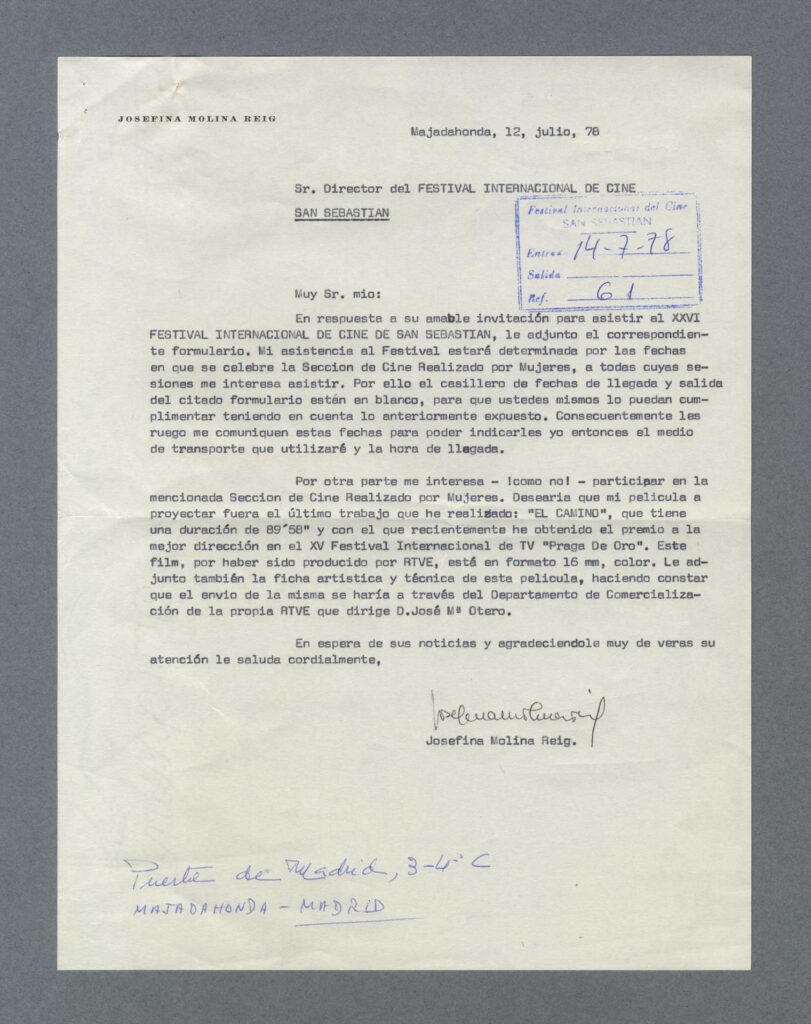
Letter from Josefina Molina to the Festival organisers (1978) San Sebastian Festival Archive [+]

[+]

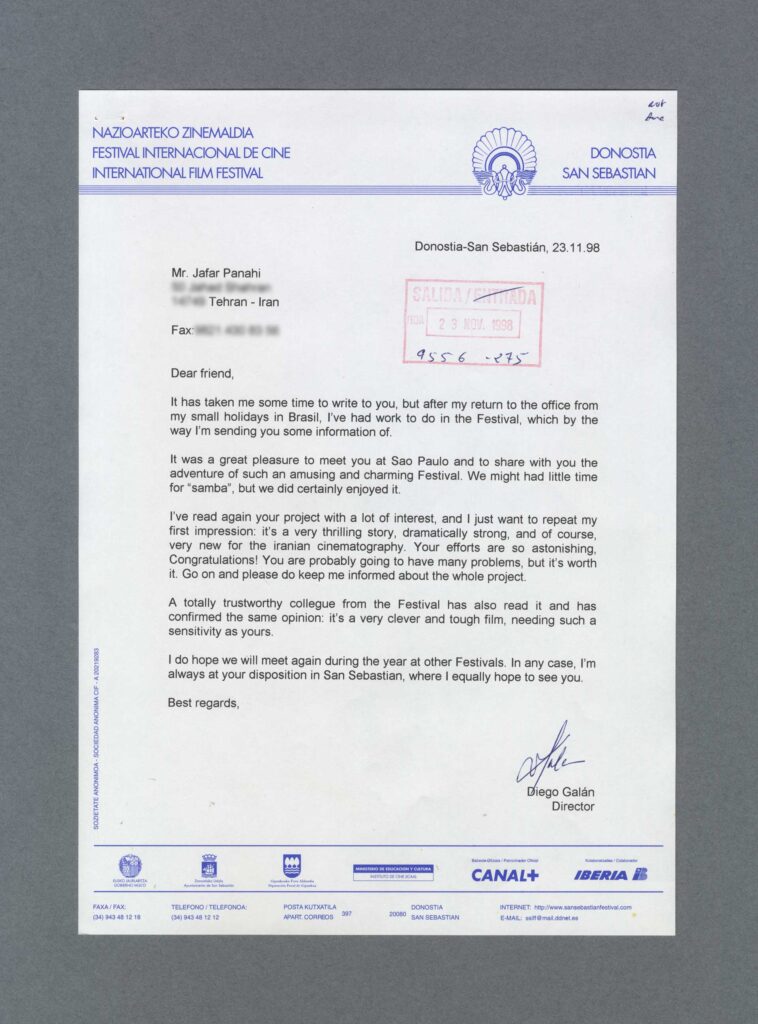
Letter from Diego Galán to film director Jafar Panahi (1998) San Sebastian Festival Archive. [+]

[+]

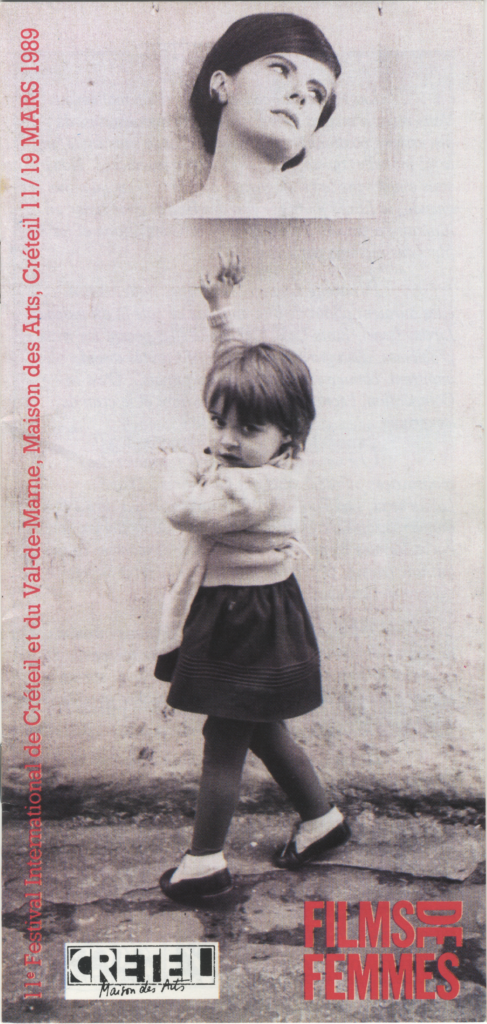
Program for the 11th edition of the Festival International de Films de Femmes de Créteil et du Val de Marne (1989) San Sebastian Festival Archive. [+]

[+]

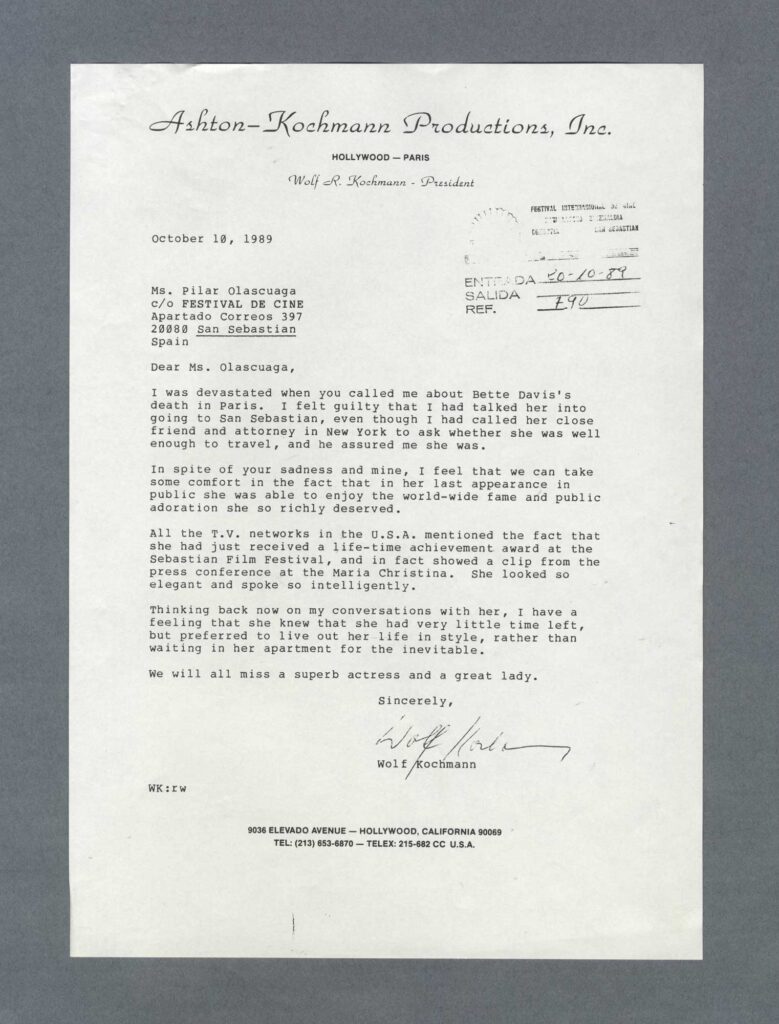
Letter from Wolf Kochmann to Pilar Olascoaga on the death of Bette Davis (1989) San Sebastian Festival Archive. [+]

[+]

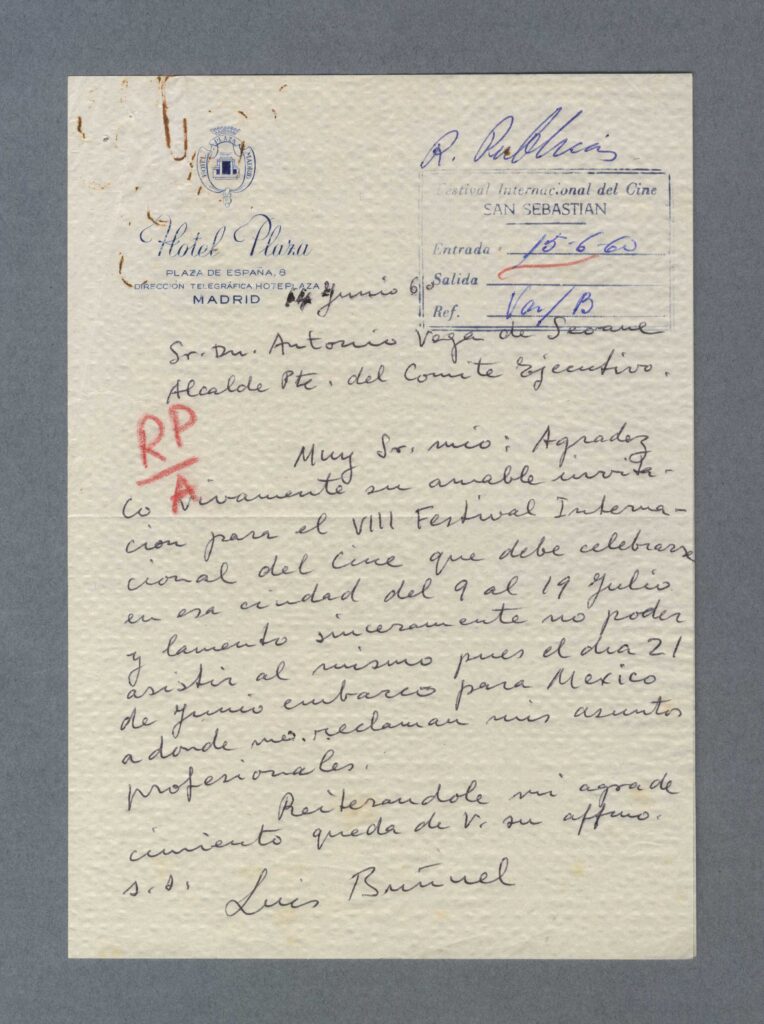
Letter from Luis Buñuel to the Mayor of San Sebastián Antonio Vega de Seoane (1960) San Sebastian Festival Archive. [+]

[+]

Letter sent by Antonio de Zulueta y Besson to the Cineclub Irún accepting to collaborate with them (1960) San Sebastian Festival Archive. [+]

[+]

Letter from underground filmmaker Antoni Padrós to Pilar Olascoaga (1977) San Sebastian Festival Archive. [+]

[+]

Survey on the Kursaal Centre (1993) San Sebastian Festival Archive. [+]

[+]

Description of the piece “Lavabo” by Isabel Herguera and Mikel Arce Sagarduy (1983) San Sebastian Festival Archive

[+]

Letter from Guadalupe Echevarria to Luis Gasca, director of the Festival, with the proposal for the creation of the Video Festival (1982) San Sebastian Festival Archive