Digital collections

Fifth issue of the 38th edition of the Festival

October 2025

On November 9, 1989, following the opening of the borders, the first bricks that had served as a physical and ideological barrier since 1961, dividing the east and west of the city of Berlin for 28 years, were symbolically demolished. Three days before Christmas, the Brandenburg Gate opened its doors and with it the country’s entry into the capitalist market, with the eastern part adopting the western currency and bringing formal German reunification to an end in November 1990. The echoes of the end of the Cold War are also palpable in the film programme of the 38th edition of the San Sebastian Film Festival, which is hosting the world premiere of the collective film Im Glanze dieses Glückes (In the Glow of Happiness) in the Zabaltegi section.

Produced by the collective Brick ins Land [A Look at the Country], composed of artists Tamara Trampe, Johann Feindt, Helga Reidemeister, Jeanine Meerapfel and Dieter Schumann, coming from both sides of the wall, the film records in real time the new direction of a country, but also the end of an era, allowing political rhetoric and, at times, humor to combine, alternating images of an auction of the Wall with confessions from members of the Stasi. Representing the collective, Helga Reidemeister from the FRG and Tamara Trampe from the GDR traveled to San Sebastián, immortalizing their critical thoughts on the reunification process in the official magazine of the film festival.

Taking as a reference Berthold Brecht’s phrase about artists taking the lead in any event, Trampe and Reidemeister defined their cultural collective with a spirit of unity that had allowed them, in times of uncertainty, to cross the symbolic barrier of the wall through their creations. Although they did not hesitate to show their rejection of the way in which the reunification process had taken place, ‘it was something like a clearance sale, as a small United States would have done’, both were enthusiastic about the possibility of a cinema that would not be affected by these forms of ‘absorption’. As a great repository of memories, the magazine also records the theoretical side of the group: an extract from the manifesto that the collective had drafted and which was published on the eve of the closing of the film festival.

Helga Reidemeister’s work covered music and trade union activism (Lokomotive Kreuzberg, 1975), the student movement and far-right militarisation (Aufrecht gehen. Rudi Dutschke-Spuren, 1980) and the internationalist Women in Black movement (Frauen in Schwarz, 1997), among others. For her part, Tamara Trampe addressed memory as the central theme of her work, with films such as Der schwarze Kasten (1992), Wiegenlieder (2010) and My Mother, a War and Me (2014), and diversified her artistic production, particularly in the field of dramaturgy, with more than fifty completed film and theatre projects. At the 1990 San Sebastian Film Festival, with wounds freshly reopened and a clear political and artistic commitment, two of the most essential voices in the field of documentary and militant cinema came together.
Digital collections

Fifth issue of the 38th edition of the Festival

Fifth issue of the 38th edition of the Festival (1990) San Sebastian Festival Archive [+]

Other documents of the month

[+]

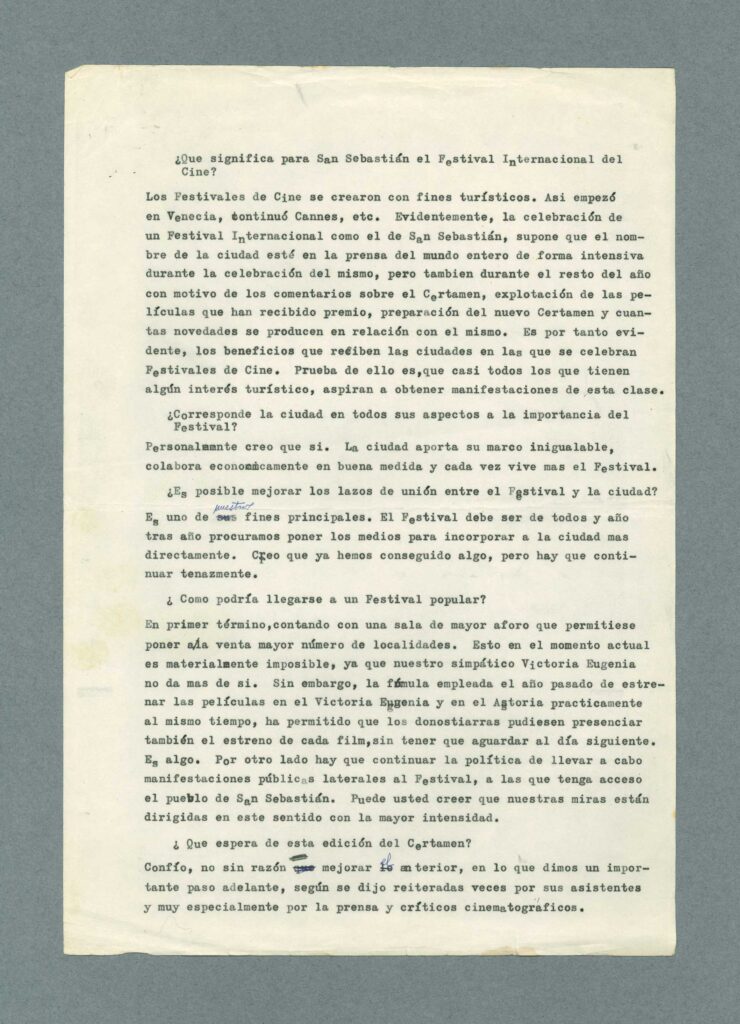
Interview with the competition organisers prior to the 16th edition in 1968 (1968) San Sebastian Festival Archive. [+]

[+]

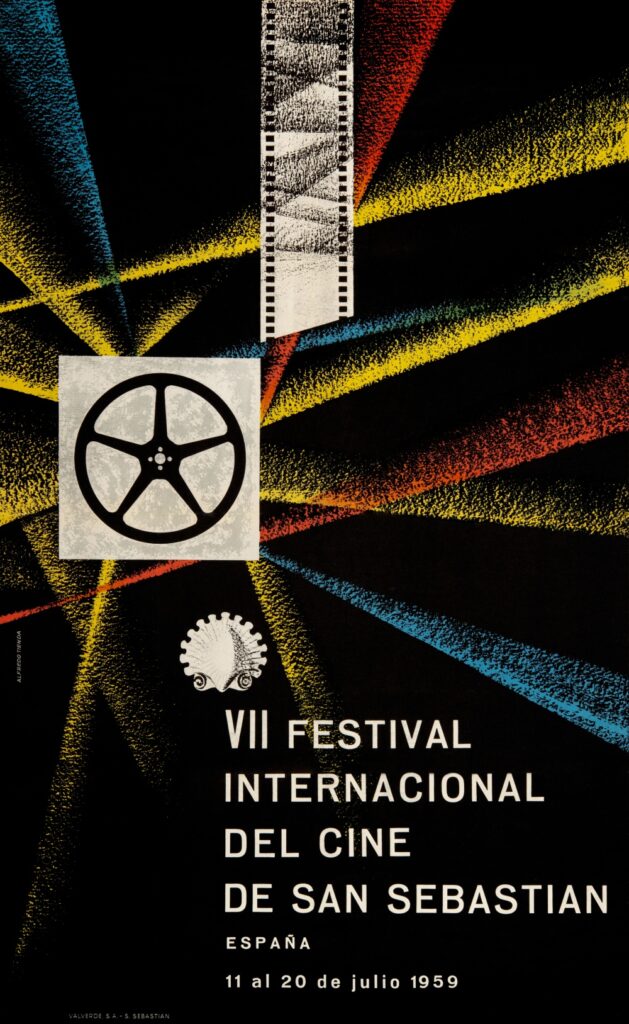
Official poster of the 7th edition (1959). San Sebastian Festival Archive. [+]

[+]

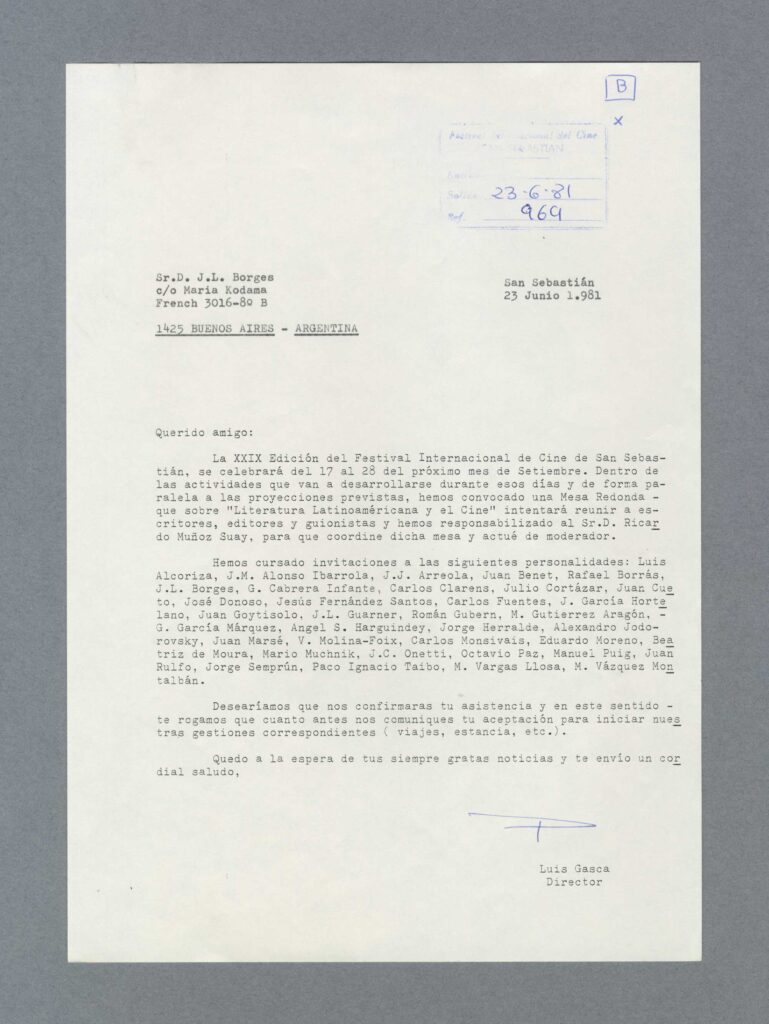
Letter from Luis Gasca to Jorge Luis Borges on the occasion of his participation in the round table discussion ‘Latin American Literature and Cinema’ (1981) San Sebastian Festival Archive. [+]

[+]

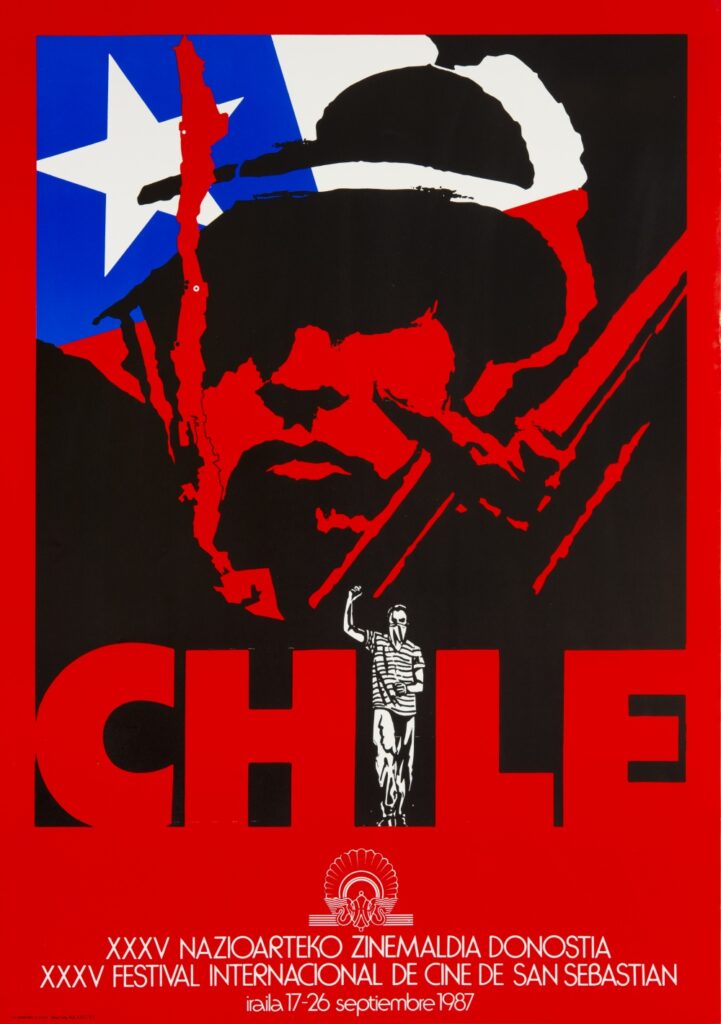
Poster of the “Chile” retrospective (1987). San Sebastian Festival Archive. [+]

[+]

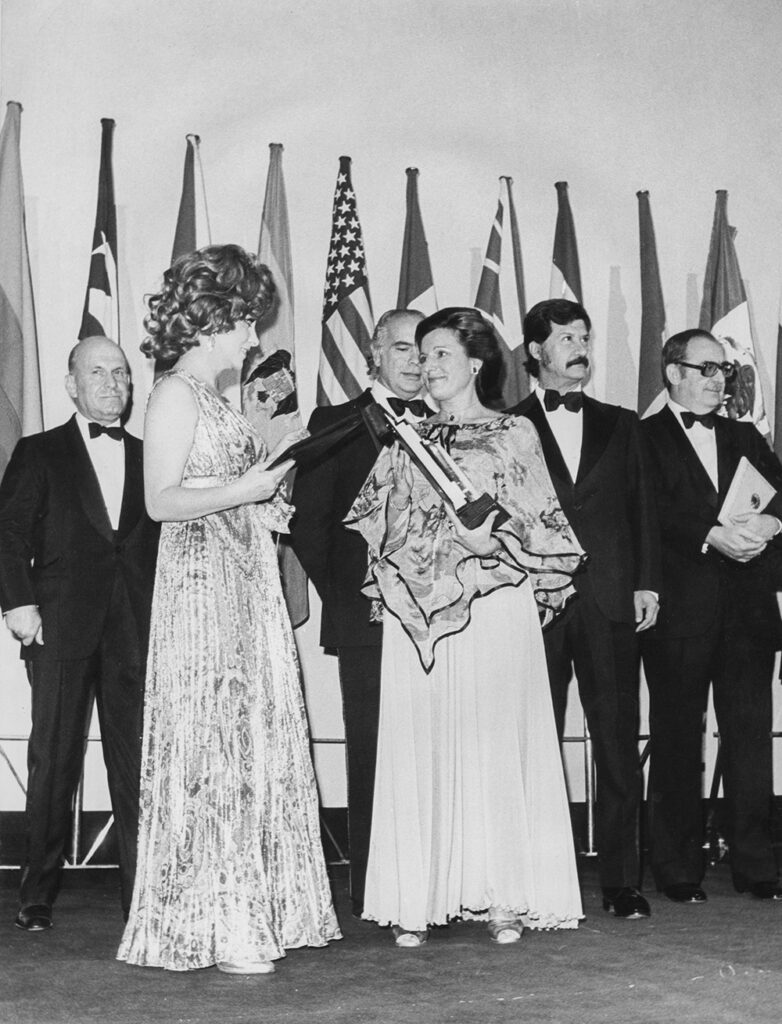
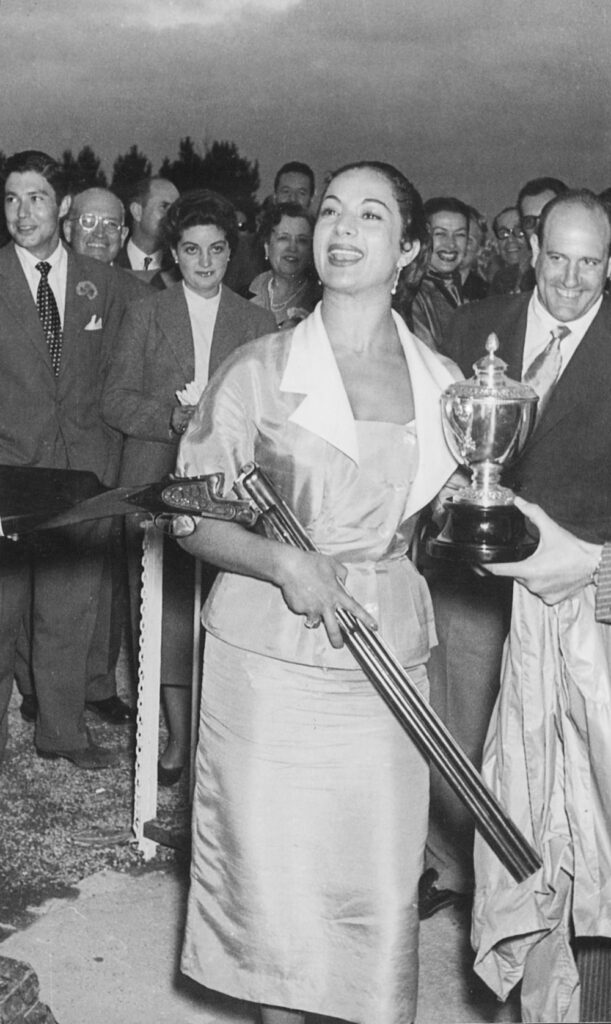
Actress Gina Lollobrigida presenting the San Sebastian Award for Best Female Performance to the distributor Procinor for “A Woman Under the Influence” (1975) San Sebastian Festival Archive. [+]

[+]

The actress Josefa Flores González, better known as Marisol or Pepa Flores, at the Hotel María Cristina (1960) San Sebastian Festival Archive. [+]

[+]

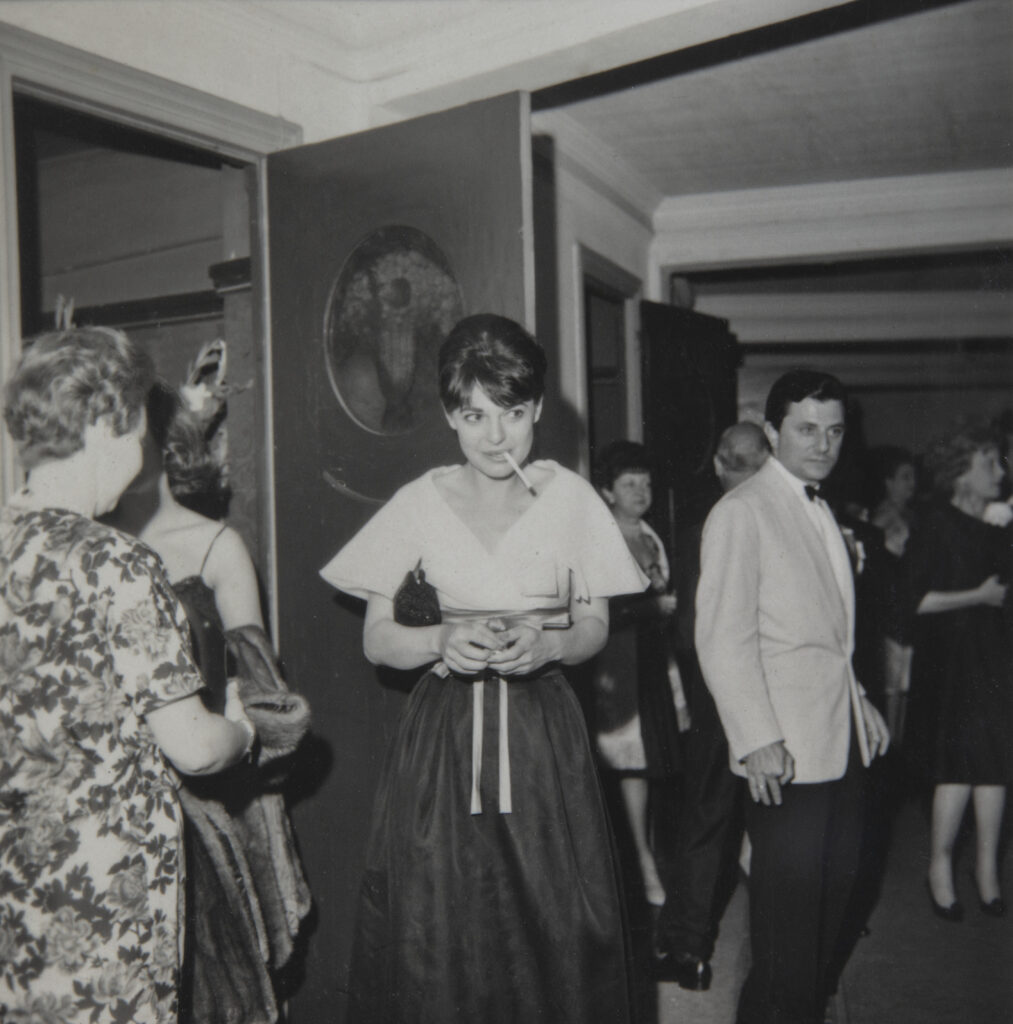
Anne Bancroft at the Victoria Eugenia Theatre’s boxes entrance during the presentation of the film “The Miracle Worker” (Arthur Penn) (1962) San Sebastian Festival Archive. [+]

[+]

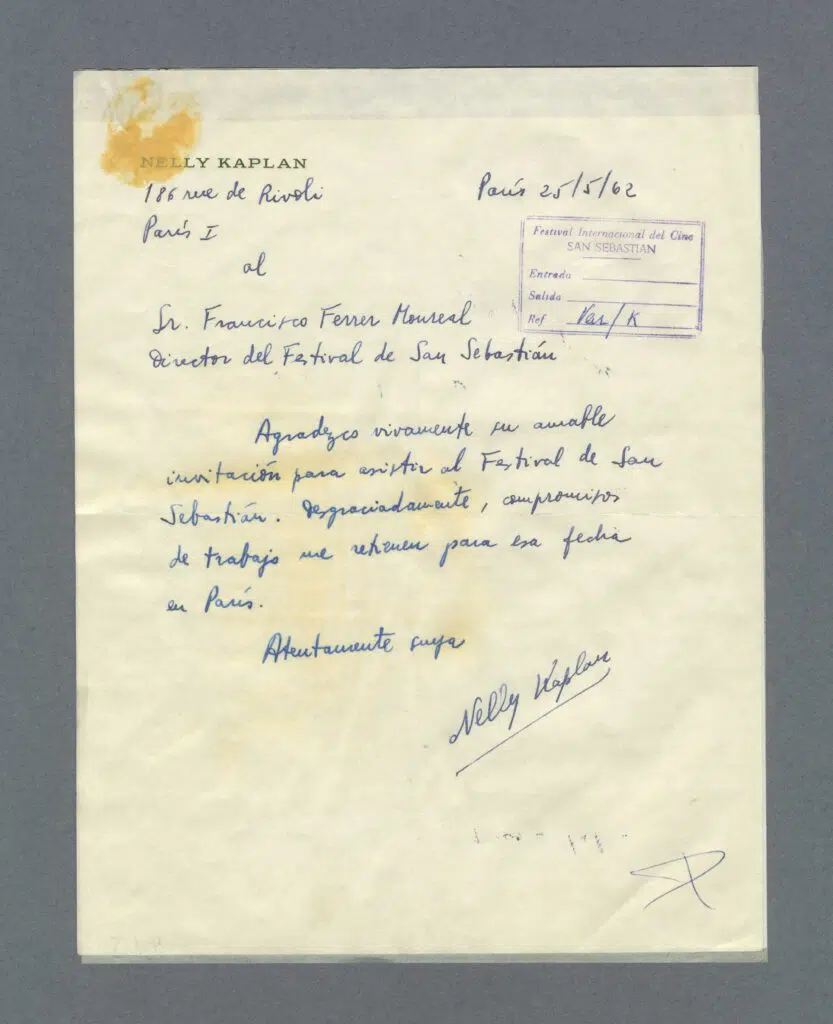
Letter from Nelly Kaplan to Francisco Ferrer on the invitation to the festival (1962) San Sebastian Festival Archive. [+]

[+]

Handwritten thank you note from René Clair (1959) San Sebastian Festival Archive. [+]

[+]

First issue of the 25th edition of the Festival (1977) San Sebastian Festival Archive [+]

[+]

Portrait of director Valeria Sarmiento (1988) San Sebastian Festival Archive. [+]

[+]

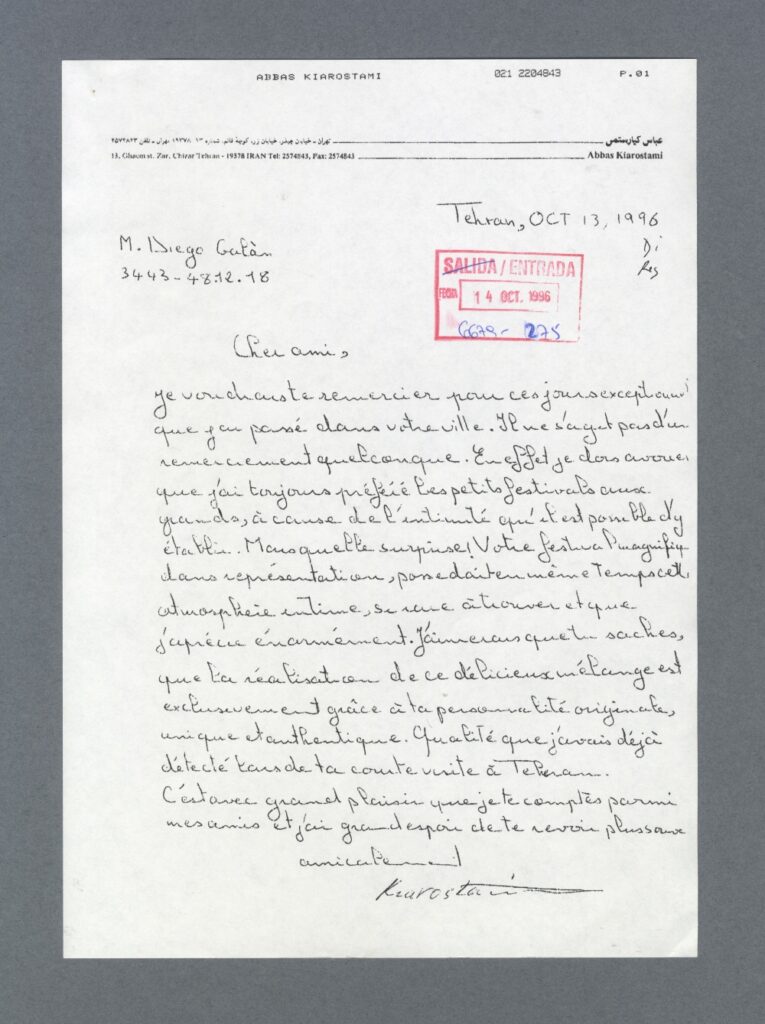
Fax from Abbas Kiarostami to Diego Galán (1996) San Sebastian Festival Archive. [+]

[+]

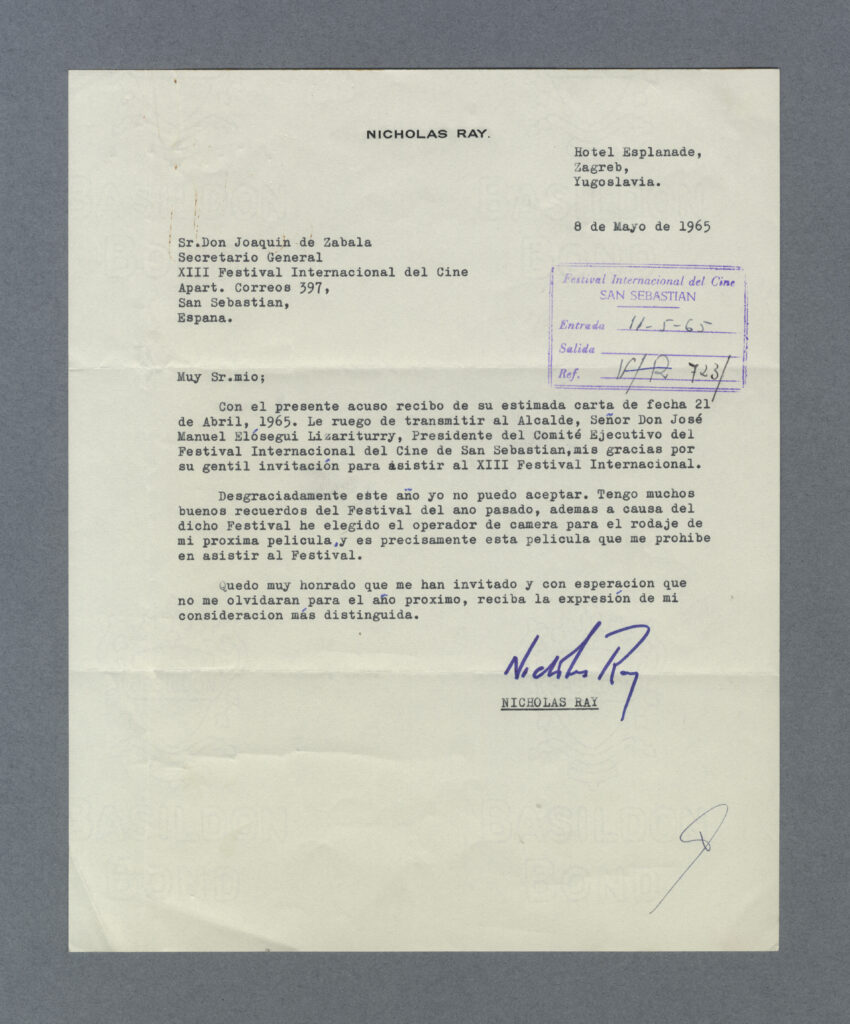
Letter from Nicholas Ray to Joaquín Zabala (1965) San Sebastian Festival Archive. [+]

[+]

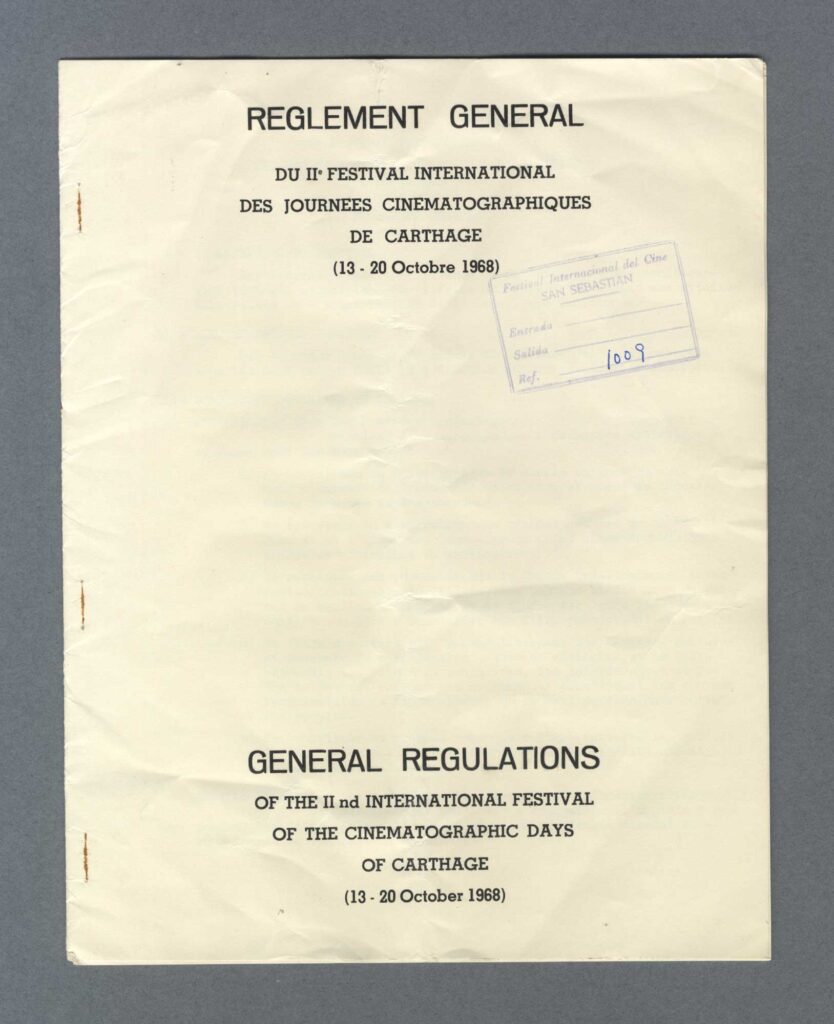
Regulations of the II Cartago International Film Festival (1968) San Sebastian Festival Archive. [+]

[+]

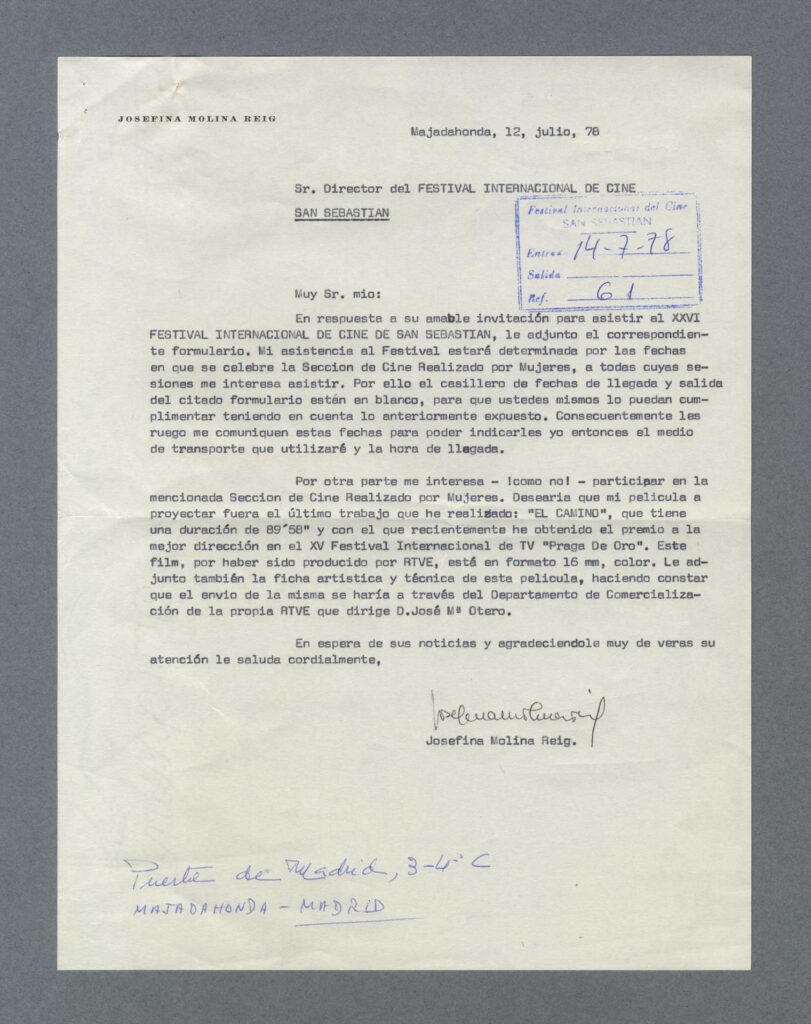
Letter from Josefina Molina to the Festival organisers (1978) San Sebastian Festival Archive [+]

[+]

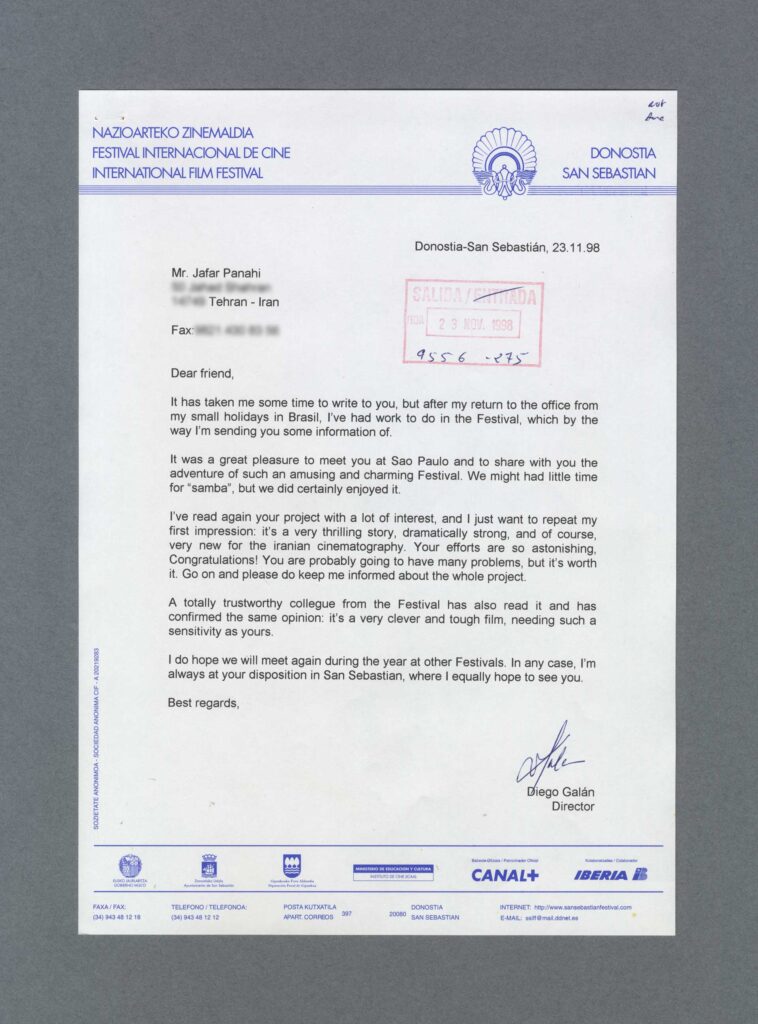
Letter from Diego Galán to film director Jafar Panahi (1998) San Sebastian Festival Archive. [+]

[+]

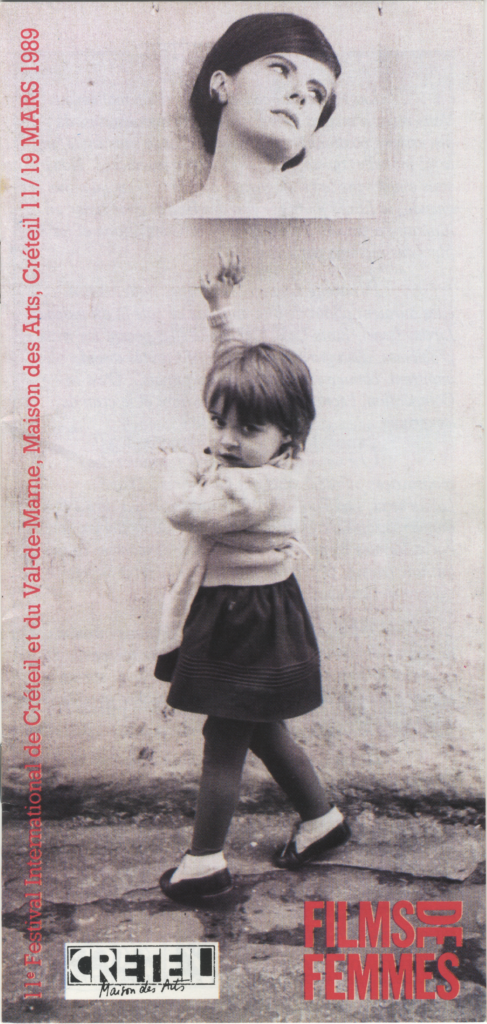
Program for the 11th edition of the Festival International de Films de Femmes de Créteil et du Val de Marne (1989) San Sebastian Festival Archive. [+]

[+]

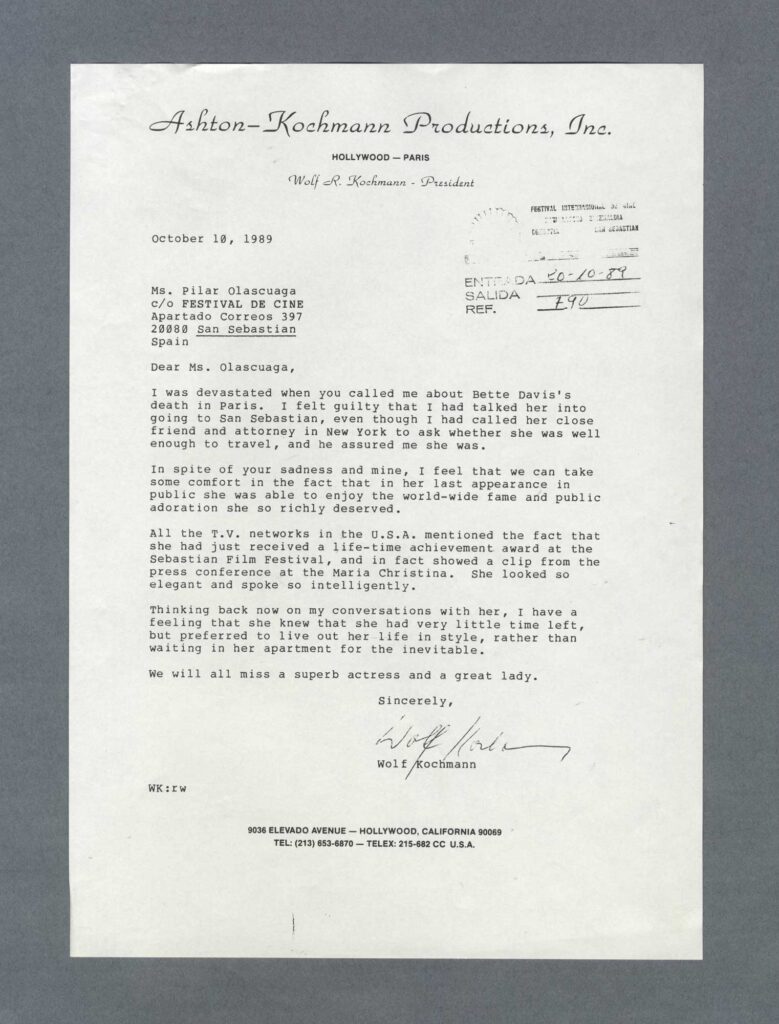
Letter from Wolf Kochmann to Pilar Olascoaga on the death of Bette Davis (1989) San Sebastian Festival Archive. [+]

[+]

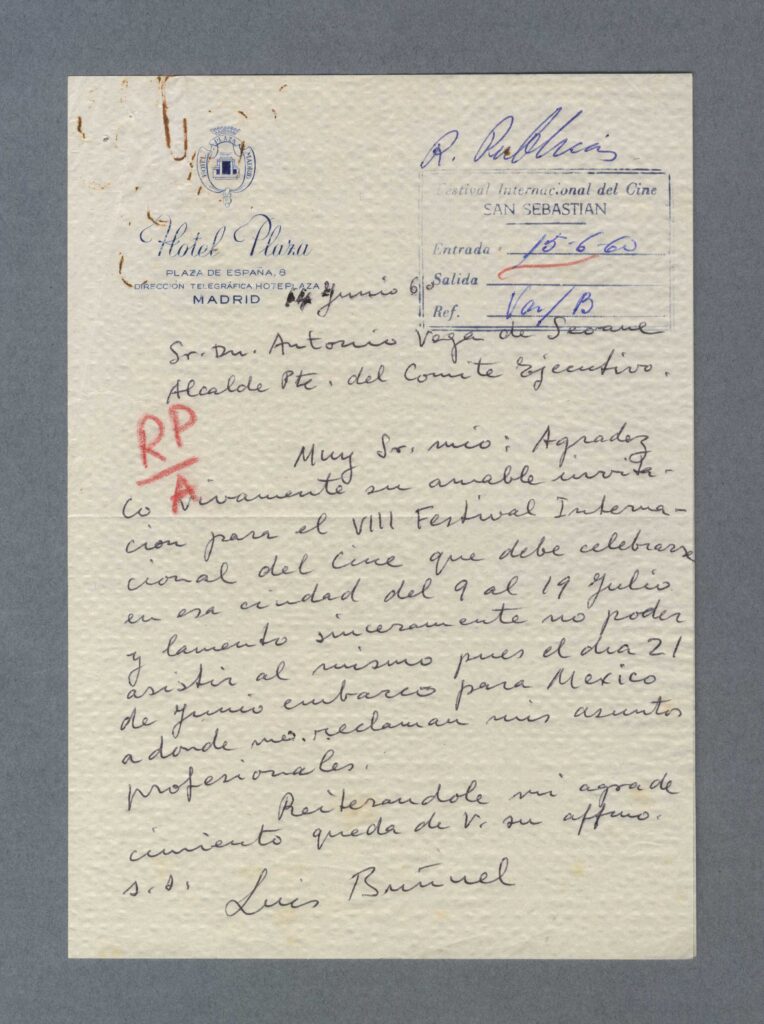
Letter from Luis Buñuel to the Mayor of San Sebastián Antonio Vega de Seoane (1960) San Sebastian Festival Archive. [+]

[+]

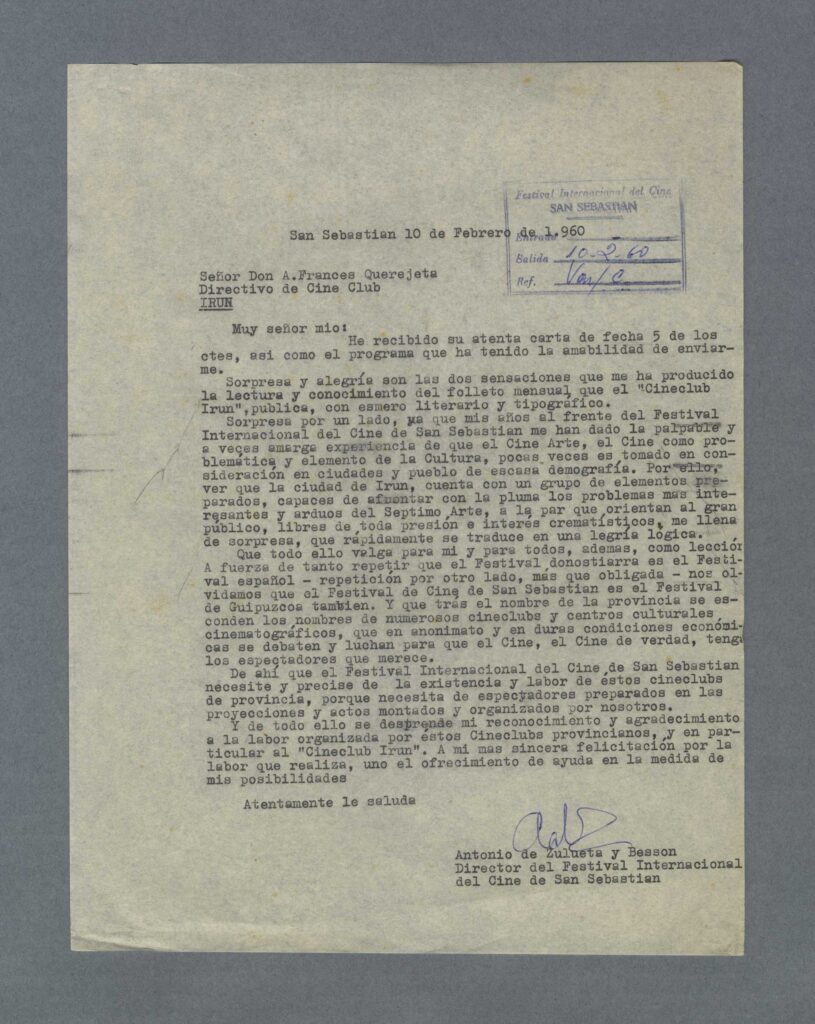
Letter sent by Antonio de Zulueta y Besson to the Cineclub Irún accepting to collaborate with them (1960) San Sebastian Festival Archive. [+]

[+]

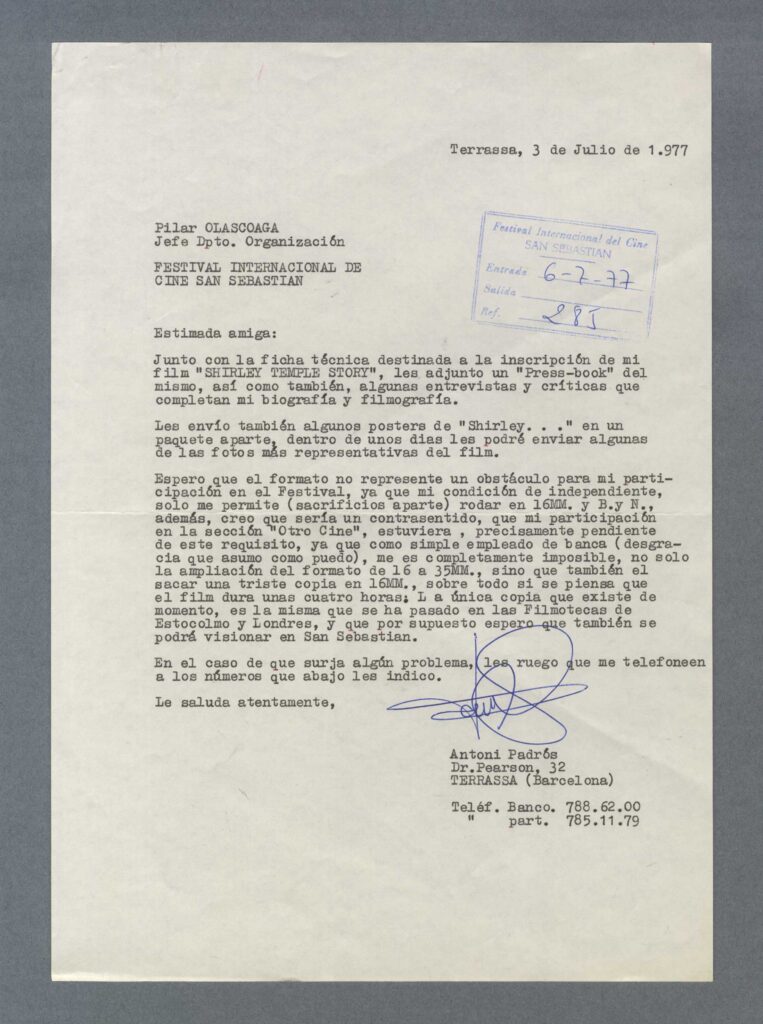
Letter from underground filmmaker Antoni Padrós to Pilar Olascoaga (1977) San Sebastian Festival Archive. [+]

[+]

Survey on the Kursaal Centre (1993) San Sebastian Festival Archive. [+]

[+]

Description of the piece “Lavabo” by Isabel Herguera and Mikel Arce Sagarduy (1983) San Sebastian Festival Archive

[+]

Letter from Guadalupe Echevarria to Luis Gasca, director of the Festival, with the proposal for the creation of the Video Festival (1982) San Sebastian Festival Archive